
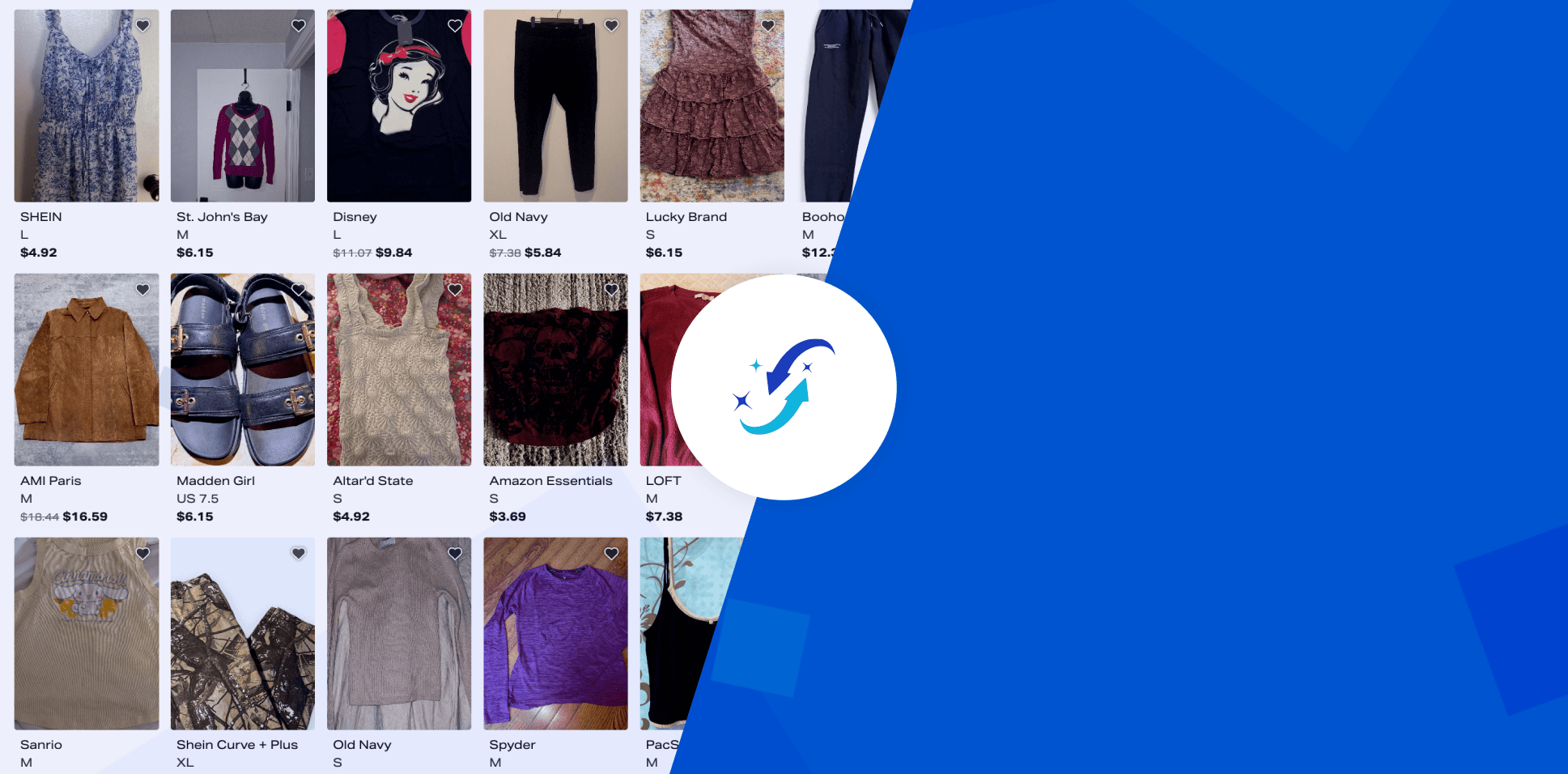

Selling secondhand clothing is becoming an increasingly popular way to make money online, and the numbers behind the trend explain why. The secondhand apparel market has grown 13% in the US in 2025 alone, and is projected to reach $78.8 billion by 2030, according to a study by ThredUp, a popular online consignment store. That growth has drawn a wave of new sellers hoping to turn a spare closet, a weekend of thrifting, or a garage full of finds into a steady stream of income.
The real question, however, isn't whether clothing resale is popular; it's whether it will ultimately be worth the time, money, and effort for you. In this guide, we'll walk through what reselling clothes online involves in 2026, how much money resellers actually earn, where to source inventory, the costs and fees to plan for, and the pros and cons that shape whether reselling makes sense as a side hustle or a business.
Key Takeaways
- The US secondhand apparel market continues to grow rapidly, and is projected to reach $78.8 billion by 2030.
- Reselling clothes can be very profitable, with professional resellers earning up to $4000 per month, and top resellers earning even more.
- Many resellers start by selling their own unworn clothes, then move on to sourcing from thrift stores, garage sales, and estate sales.
- Costs and fees vary significantly across reselling marketplaces, directly affecting how much you can earn and what you should sell on each one.
- Different platforms attract different buyers, which is why many sellers crosslist to multiple marketplaces in order to reach more customers.
How Reselling Clothes Online Works
Reselling clothes online means buying garments (new or secondhand) and reselling them for profit on ecommerce platforms. The activity itself isn't new, but the scale it operates at today is. According to the ThredUp study and GlobalData, the US secondhand apparel market grew nearly four times faster than the broader retail clothing market in 2025, with 59% of US consumers having shopped secondhand apparel that year.
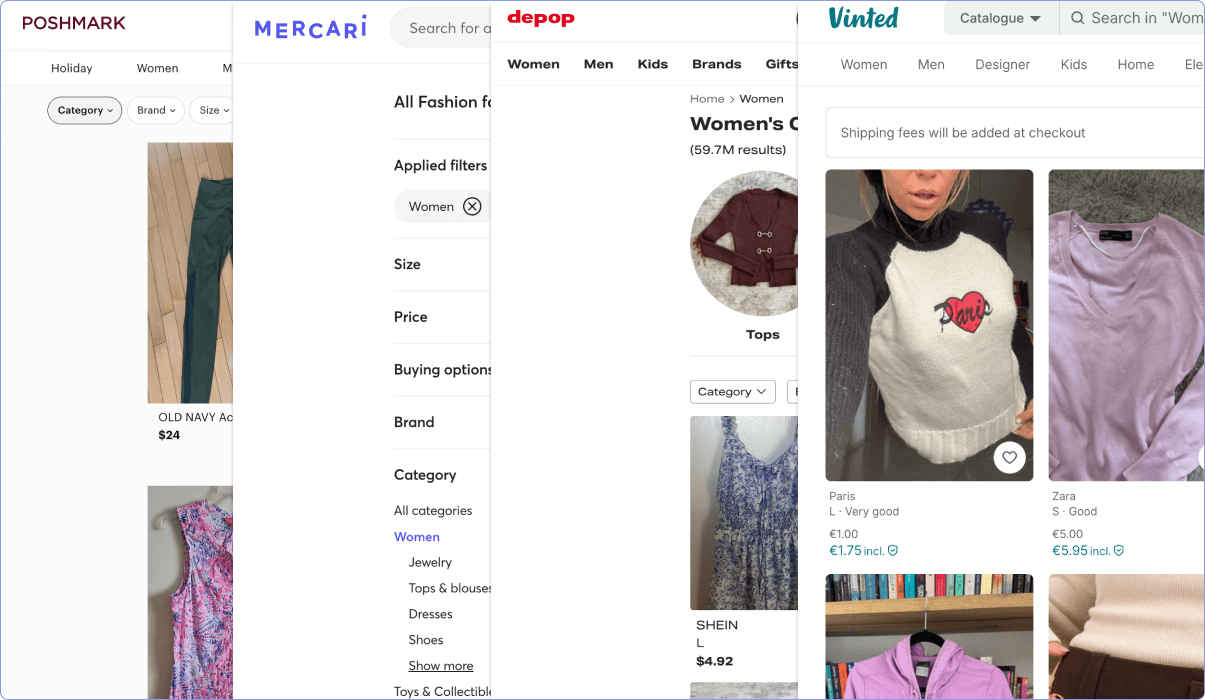
That growth has produced a wide range of platforms suited to different types of secondhand sellers and inventory. Fashion-focused marketplaces like Poshmark, Depop, Vinted, Grailed, and others cater to specific buyer demographics and style preferences, while general marketplaces like eBay and Mercari accept clothing alongside other categories. Some sellers also sell via standalone webstores through shopping cart platforms like Shopify, BigCommerce, or WooCommerce.
The right platform (or combination of platforms) for you will depend on what you sell and what kind of selling experience you're after. A vintage denim seller and a contemporary women's fashion reseller will find their buyers on different marketplaces, which is why many sellers choose to list on multiple channels as they grow and expand to new fashion reselling niches.
How Much Money Can You Make Reselling Clothes?
How much money you can make from reselling clothes varies depending on how much time you're interested in investing in your online reselling business. A casual seller listing a few unworn items from their own closet might earn a few hundred dollars a month at best, while a more dedicated part-time reseller can reach four figures. Full-time resellers with steady sourcing can reach around $4000 per month, and top sellers can earn even more.
Your profits will depend heavily on several factors, including platform fees and the category of clothing you're selling. Selling fees can range from none on some platforms to 20% or more on others, while basic operating costs (packing materials and shipping costs) start at around $100 and increase as your business grows. In terms of category, general clothing can sell for 30% to 50% profit, branded vintage pieces can reach 50% to 70%, while luxury designer items and hyped streetwear can earn even more during peak demand.
In our experience, sellers who treat online reselling as a business by regularly sourcing new inventory and listing it on multiple platforms tend to consistently earn four figures a month. Sellers who take a more casual approach by reselling unworn clothes from their own closets tend to earn less consistently, and typically don't earn more than a few hundred dollars a month at most.
How to Source Clothes to Resell for Profit
Sourcing is where most clothing reselling businesses succeed or fail, and it can be hard to get it right if you don't already know the ins and outs of shopping secondhand. Most resellers rely on three main sourcing channels for inventory:
- Thrift stores. Goodwill and other thrift chains typically offer low-cost inventory, and are accessible to virtually everyone. There is one caveat: thrifting requires time, patience, and frequent visits, and it can take a while to get a feel for what's likely to sell.
- Garage and estate sales. Typically require more effort than thrifting, but can often be high-reward. Estate sales in particular are goldmines for vintage clothing and designer pieces, but you'll need to plan in advance and arrive early for the good stuff.
- Wholesale and liquidation lots. Buying in bulk from returns, overstock, or manifest lots requires more upfront investment and storage space, but keeps a steady flow of inventory coming in as your business grows.
Costs vary significantly by area, seasonality, and demand for specific items. Most successful clothing resellers combine multiple channels rather than relying on just one.
Pros and Cons of Reselling Clothes Online
Reselling clothes has clear appeal — after all, what's not to like about getting paid for your old unworn items — but it also comes with challenges that catch many new sellers off guard. Understanding both sides ahead of time helps set realistic expectations and avoid the common mistakes that cause new sellers to quit before they ever see returns. In this section, we'll cover the main pros and cons of reselling clothes online to help you understand if reselling clothes is a good option for you.
Pros of Reselling Clothes Online
Reselling clothes online is becoming increasingly popular, and for good reason. There are plenty of upsides, including:
- Cheap and easy to start. You can start with clothes already in your closet and just a smartphone. There's no product development, no manufacturing, and no wholesale minimums to meet, and startup costs are low enough to allow you to test the business before committing.
- A growing market of buyers. Gen Z and Millennials are projected to drive more than 70% of secondhand market growth through 2030. These generations increasingly view secondhand as a default rather than a last resort, as previous generations did.
- Works at any pace. Reselling scales up or down based on how much time and energy you have, from a side hustle to a full-time business. You can adjust your sourcing pace, listing volume, and which platforms you use to your preferred selling experience.
Cons of Reselling Clothes Online
While there are many upsides, reselling clothes online does have its downsides. They include:
- Time-intensive. Every listing needs to be photographed, measured, described, priced, and eventually packed and shipped. Growing your online reselling business means creating more efficient workflows with tools like ExportYourStore to automate some of the work.
- Sourcing is unpredictable. Good secondhand items don't appear on demand, so finding inventory consistently takes ongoing effort and time investment. Furthermore, time spent searching doesn't always result in sellable finds.
- Slow start and changing trends. It can take two to three months to see steady sales, and unsold inventory is not uncommon for newer sellers. Trends shift quickly in fashion, so an item that seemed like a smart buy when you sourced it can lose value if the trend passes before it sells.
Costs and Fees That Affect Whether Reselling Clothes Is Worth It
Every clothing reseller faces the same set of costs, and understanding how they affect margins is essential to deciding whether reselling clothes is worth it for you.
Platform fees are the most direct and predictable cost, and they vary widely across marketplaces. On the higher end, Poshmark charges 20% commission on sales of $15 or more, and a flat $2.95 on sales under $15 (though this fee includes a prepaid shipping label). eBay's fees vary, but typically end up being around 13.25% on most clothing sales, plus a small per-order fee. Mercari charges a flat 10% on the item price plus buyer-paid shipping. Vinted charges sellers no commission at all, and Depop in the US and UK charges no selling fee but does apply a 3.3% + $0.45 payment processing fee per transaction.
Another significant cost is sourcing, which can vary depending on where and how you're buying inventory, as well as packing materials and shipping labels. Finally, there are taxes and business expenses like registration and bookkeeping, which can vary significantly depending on where you're located.
Using ExportYourStore to Cross List Clothes for Resale
Due to the varied nature and specific niches of secondhand fashion, listing on just one reselling marketplace limits your reach. Each reselling marketplace has its own buyer base, style preferences, culture, and shopping habits, and certain items simply do better on some platforms. To grow their business and reach more buyers, many resellers ultimately opt to crosslist their inventory to additional resale marketplaces with the help of crosslisting solutions like ExportYourStore.
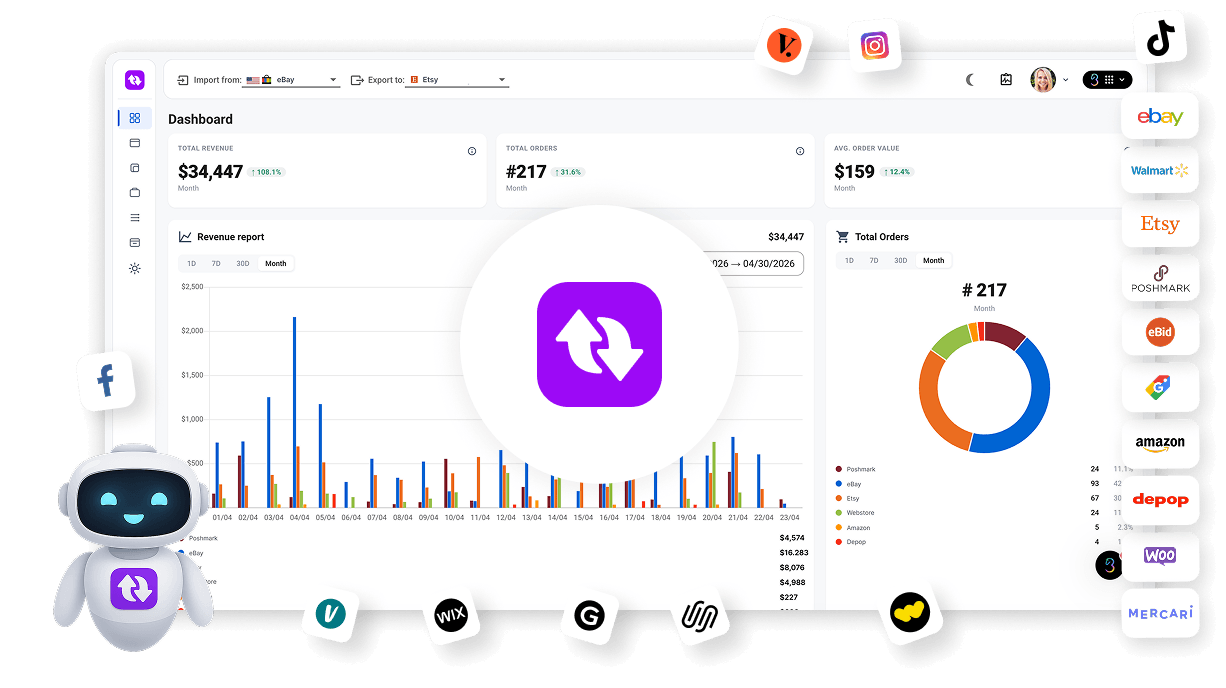
ExportYourStore is an AI-powered crosslisting and inventory management tool built to make multi-platform selling manageable. Clothing resellers can use it to crosslist their inventory across Poshmark, Depop, Mercari, Vinted, Grailed, Whatnot, Vestiaire Collective, eBay, and Etsy. For sellers running a standalone webstore, ExportYourStore also integrates with Shopify, BigCommerce, and WooCommerce, allowing more established resellers to break free from the confines of marketplace selling.
ExportYourStore makes it easy to list and sell on multiple marketplaces by keeping inventory synced automatically, and importing orders from all channels into a single multichannel order management interface. Plus, if you're already used to selling on one platform, you can continue managing everything from there by designating it as your source store. No need to learn the intricacies of every new platform — simply list and manage inventory from your source store, and ExportYourStore will update all your linked channels automatically.
FAQ
Q: Is reselling clothes worth it as a side hustle?
For many people, yes. Clothing resale has one of the lowest barriers to entry among ecommerce businesses, and many sellers earn a few hundred to a couple thousand dollars per month working part-time. Whether it's worth it for you will depend on how much time you can consistently commit to sourcing, listing, and shipping, and whether the money you make is worth the time you put in.
Q: How much money can you realistically make reselling clothes?
Casual sellers listing a few items from their own closet typically earn a couple hundred dollars per month, while full-time resellers with steady sourcing and workflows can earn a few thousand dollars a month or more. How much you can earn depends on your selling niche and how much you can grow your business.
Q: What are the best platforms to resell clothes online?
The best platform for reselling clothes depends on what you're selling and who you're selling to. Some popular choices include:
- Poshmark — primarily for women's fashion, though there is a sizable children's section and growing home goods, men's, and even pet sections too
- Vinted — primarily focused on fashion with a dedicated designer section, though electronics, books & media, and even collectibles are regularly sold.
- Depop — exclusively for fashion, Depop is especially popular with Gen Z and younger Millennials
- Mercari — While a broader marketplace for fashion and more general goods, Mercari remains a good choice for reselling mid-range fashion
- eBay — A marketplace for everything, eBay is often overlooked by resellers for this exact reason, but it is a great place to resell clothes online.
More niche platforms include Vestiaire Collective, a luxury fashion marketplace, and Whatnot, a live auction platform for reselling everything from collectibles to fashion.
Q: Do you need a business license to resell clothes online?
It depends on your location. Most US cities and many other jurisdictions require a business license for regular resale activity, though specific requirements vary. Once you start earning money regularly from reselling, it's worth checking the laws in your area to be sure that you're compliant.


